Nation-State Actor Targets Chaos Labs Oracle Infrastructure in Weekend Attack
A nation-state actor targeting Chaos Labs oracle infrastructure is a signal that adversaries have mapped the critical middleware layer of institutional tokenization.
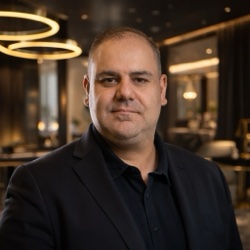
Chaos Labs secured $20 million in seed funding from Galaxy and PayPal Ventures to build automated economic security systems for DeFi protocols [1]. That capital vote of confidence came in April 2026. Six weeks later, a nation-state actor was probing its oracle infrastructure. The network held. The keys were rotated. No breach occurred [2]. But the fact that the attack happened at all tells you something important about where institutional tokenization is headed, and who is paying attention to it.
Thesis
The Chaos Labs incident is not a near-miss story. It is a threat model update. Nation-state adversaries have moved past retail-facing targets. They are now probing the middleware layer that institutional capital depends on. If you are allocating into tokenized real-world assets, or building the protocols that hold them, your infrastructure due diligence just got a new mandatory line item.
What Happened
On the weekend of May 8, 2026, Chaos Labs detected a targeted attack attempt on its Chaos Oracle Network [3]. The company executed a full key rotation across its operational systems. Founder Omer Goldberg disclosed the incident publicly on X, characterizing the attacker as a potential nation-state actor [2].
The network was not breached. Chaos Labs confirmed no suspicious activity following the remediation [3]. The key rotation appears to have worked as designed.
That is the operational summary. It reads like a success story. The detection worked, the response worked, and the infrastructure held. But the correct response to this event is not relief. It is a harder look at the threat environment that produced it.
Chaos Labs, founded in 2021, has built what it describes as end-to-end risk intelligence, simulation, and real-time monitoring infrastructure for on-chain protocols [4]. Its systems are not peripheral tooling. They sit inside the risk engines of major DeFi protocols including Aave and Morpho. When Chaos Labs processes a price feed, that feed informs collateral decisions across billions in on-chain positions. The middleware is load-bearing.
Goldberg's public disclosure on X was the right call. It gave the broader ecosystem a chance to assess exposure and act. Several crypto firms responded by switching oracle providers following the announcement [5]. That reaction is worth examining carefully. It suggests that for many teams, redundancy planning was not already in place. The disclosure accelerated decisions that should have been made earlier.
What an Oracle Actually Does, and Why It Is a Load-Bearing Wall
An oracle is the system that tells a blockchain what real-world prices are. That sounds simple. The consequences of getting it wrong are not.
Here is the mechanism. A lending protocol holds collateral. It needs to know whether that collateral is worth enough to back the loans it has issued. It cannot read a Bloomberg terminal. It reads an oracle. The oracle says a tokenized bond is worth $100. The protocol accepts that. If the oracle is wrong, or manipulated, the protocol cannot tell. It acts on the false number.
If the oracle says $100 when the real price is $60, two things happen. First, borrowers are undercollateralized without the protocol knowing. Second, when the manipulation is discovered or corrected, liquidations trigger at the wrong levels. Positions that should have been safe get wiped. Positions that should have been liquidated earlier were not. The cascade follows.
This is not a theoretical risk. Oracle manipulation has been the attack vector in several high-profile DeFi exploits. The mechanism is well understood by adversaries.
Chaos Labs provides risk engines and oracle infrastructure to protocols that hold substantial on-chain positions [4]. The DeFi tokenization market was projected to exceed $100 billion by 2026 [1]. A meaningful share of that value flows through protocols that depend on oracle price feeds to manage collateral and liquidation logic. The middleware is not background infrastructure. It is the mechanism by which capital is protected or lost.
This is why the attack target matters. Retail wallets hold individual funds. Oracle middleware holds the integrity of entire protocol economies. A successful manipulation of a major oracle does not steal from one user. It misprices collateral for every user in every protocol that trusts that feed.
Why Nation-State Attribution Changes the Risk Model
Nation-state actors allocate serious resources. They have technical depth, patience, and strategic objectives. They do not probe targets at random. The choice to target oracle middleware specifically suggests that adversaries have studied the architecture of institutional tokenization and identified where a single point of failure produces maximum disruption [2].
Previous high-profile attacks in the crypto space targeted retail-facing protocols, exchanges, and bridges. Those targets made sense for financially motivated attackers. Steal funds, move them, launder them. The Chaos Labs attack was different. Oracle infrastructure does not hold user funds directly. Compromising it does not produce an immediate financial theft. It produces something more dangerous: the ability to manipulate the price signals that an entire ecosystem of protocols trusts.
That is a different objective. It is consistent with nation-state goals, which tend toward disruption, intelligence gathering, and the creation of systemic instability rather than direct financial gain.
The shift in target selection is the signal. Adversaries have mapped the architecture. They know that retail wallets are not the load-bearing walls. Oracles are. Custody infrastructure is. Key management systems are. The attack on Chaos Labs is evidence that sophisticated actors have done the architectural analysis and are now testing the components that matter most to institutional capital.
Several crypto firms switched oracle providers following Goldberg's disclosure [5]. That is a rational short-term response. But switching providers does not solve the underlying problem if the new provider has the same key management vulnerabilities, the same single points of failure, and the same absence of documented incident response procedures. The question is not which oracle provider you use. The question is what standards apply to oracle infrastructure across the industry, and who enforces them.
Right now, no one enforces them. Oracle providers operate without mandatory security standards, without required disclosure timelines, and without regulatory oversight of their key management practices. That gap will close eventually. The Chaos Labs incident may accelerate the timeline.
The Counter-Narrative
Skeptics will argue that this incident proves the system works, not that it is broken. Chaos Labs detected the attack, rotated its keys, confirmed no breach, and disclosed publicly within days [3]. That is exactly what good incident response looks like. The skeptic position holds that one failed attack attempt on one provider, which was caught and contained, does not justify a systemic reassessment of oracle infrastructure risk. Markets did not move. No positions were liquidated incorrectly. No funds were lost. The bear case is that this is a security team doing its job, and the broader alarm is overcalibrated.
That argument underestimates one fact: the attack was attributed to a nation-state actor [2]. Nation-state actors do not make one attempt and stop. They probe, learn, and return with better information. The key rotation closes the specific vector that was targeted. It does not close the interest. The correct response to a nation-state probing your infrastructure is not to note that the first attempt failed. It is to assume the next attempt will be better informed.
Who Should Care
If you are a DeFi protocol risk manager: Your oracle provider is now a counterparty risk question, not a technical dependency. You need documented answers on key management practices, incident response timelines, and redundancy architecture before your next governance cycle. The Chaos Labs incident gives you the justification to demand those answers. Use it. If your oracle provider cannot produce a clear incident response playbook, that is material information for your risk committee.
If you are a family office or institutional allocator with exposure to tokenized real-world assets: Ask every protocol in your portfolio which oracle infrastructure they depend on and whether they have a fallback. Ask what happens to your position if that oracle goes dark for six hours. If the answer is unclear, or if the protocol team has not thought through the scenario, that is a due diligence gap. Oracle provider dependency now belongs on your counterparty risk checklist alongside the legal wrapper, the custodian, and the audit history.
If you are a fintech founder building on-chain financial products: The Chaos Labs incident is a case study in why infrastructure due diligence needs to extend below the protocol layer. You are not just dependent on the smart contracts you deploy. You are dependent on every data feed, risk engine, and middleware provider those contracts trust. Your users are exposed to risks they cannot see and did not consent to. Mapping that dependency stack is not optional anymore. It is a product responsibility.
What to Watch Next
First, watch for a formal infrastructure review or contingency disclosure from Aave or Morpho in the next 30 days. Both protocols depend on Chaos Labs risk infrastructure [4]. If neither publishes any formal response to this incident, that silence is itself a data point. It tells you how seriously large protocols are treating oracle dependency as a disclosed risk to their users. The first protocol to publish a clear oracle redundancy framework will set the standard others are measured against.
Second, watch for any regulated custodian or asset manager with on-chain exposure to update its counterparty risk framework to include oracle provider dependency. Institutional capital is moving on-chain. The compliance infrastructure has not caught up. The first institution to formally include oracle provider in its counterparty risk documentation will create a template that regulators and auditors will eventually require of everyone. That document, when it appears, will matter more than any single protocol's response.
Third, watch for a Chaos Labs technical post-mortem naming the specific attack vector. Goldberg disclosed the incident publicly [2], which was the right first step. The more important document is a technical post-mortem that explains what was targeted, how the detection worked, and what the key rotation closed. That document, if published, becomes required reading for every protocol risk team in the space. It will also accelerate demand for oracle redundancy standards. If Chaos Labs does not publish it, the absence will raise questions about what the full picture looks like.
Closing
How many of the protocols in your portfolio can tell you, right now, what happens to your position if their oracle goes dark for six hours?