Warsh Confirmed to Fed Board, Chair Appointment Imminent
The most divisive Fed chair confirmation in modern history reshapes rate expectations, stablecoin regulation, and AI infrastructure financing in one move.
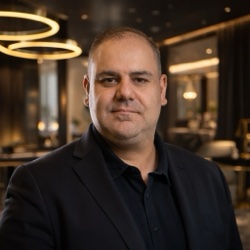
Fifty-four to forty-five. That is the margin by which the U.S. Senate confirmed Kevin Warsh as the next Federal Reserve chair on May 13, 2026 [1][2]. It is the most divisive vote ever recorded for a Fed chair confirmation [2]. Jerome Powell's term expires this Friday [3]. The White House sequenced this deliberately: board seat first, chair vote second. That sequencing tells you everything about the political intent behind this appointment.
Thesis
Warsh's confirmation is not just a personnel change. It is a repricing event. Terminal rate assumptions need to move. Stablecoin and tokenized asset timelines need to be stress-tested against a harder regulatory boundary. AI infrastructure financing built on the old cost-of-capital assumptions is already stale. The 54-45 vote is the signal. The question is whether markets, founders, and allocators are moving fast enough to act on it.
What Happened
Kevin Warsh, 56, was confirmed by the U.S. Senate on May 13, 2026, to serve as Federal Reserve chair [1]. He also received a 14-year appointment to the Fed's rate-setting board [4]. He succeeds Jerome Powell, who has led the Fed since 2018 and whose term expires Friday [3][5].
The confirmation came after a deliberate White House sequencing strategy. Warsh was first confirmed to the Board of Governors, then immediately positioned for the chair vote. That approach gave the administration maximum control over the transition timeline and minimized the window for institutional resistance.
Warsh is affiliated with the Hoover Institution and carries a well-documented hawkish-to-pragmatic policy record [6]. This was not a surprise appointment. Markets had months to price it. The question is whether they actually did, or whether they anchored to Powell's final posture and deferred the adjustment.
The partisan breakdown matters. A 54-45 vote is not a mandate. It is a bare majority in a charged political environment. Democratic opposition centered on central bank independence [1][2]. That opposition does not disappear after the vote. It becomes the backdrop for every Warsh press conference, every Senate Banking Committee hearing, and every policy decision he makes in year one. Warsh will govern knowing that roughly half the Senate is watching for any move that looks like political accommodation on rates.
That pressure cuts both ways. It could push him toward demonstrable hawkishness to prove independence from the White House. It could also create friction if the administration wants rate cuts and Warsh resists. Either way, the political temperature around monetary policy has changed in a durable way. The 54-45 number is the proof.
The Rate Repricing That Has to Happen Now
Hawkish means Warsh prefers higher interest rates and a smaller Fed balance sheet [6]. The Fed's balance sheet currently sits at roughly eight trillion dollars in bonds accumulated to suppress borrowing costs after 2008 and again after 2020. Warsh has been skeptical of the unconventional tools used to build that pile.
The effective federal funds rate was priced at around 3.87% heading into this confirmation [7]. Pre-Warsh projections from some institutional forecasters pointed toward a neutral rate of approximately 3% as the Fed's gradual destination [7]. Those projections were built on Powell's framework. That framework is now being replaced.
A higher terminal rate raises the cost of every dollar borrowed across the economy. Fixed income portfolio managers who built models on the old neutral rate assumption are already working with wrong inputs. The adjustment is not optional. It is a matter of when, not whether.
The 10-year Treasury yield is the clearest real-time signal available. It prices in long-run rate expectations more honestly than any Fed statement. Watch it over the next two weeks. If it moves up 20 to 30 basis points from pre-confirmation levels, the bond market is telling you it believes Warsh will follow through. If it stays flat, the market is betting on moderation once he is in the chair. Either reading is useful. The yield does not lie.
NPR noted that Warsh has argued there is room for the central bank to lower interest rates, but that this could be challenging at a time of rising inflation [3]. That nuance matters. Warsh is not a pure hawk. He is a pragmatist who has shown willingness to adjust. But his baseline posture leans toward restraint, and his skepticism of balance sheet expansion is well-established. In a world where inflation concerns and elevated oil prices are already pushing mortgage rates higher for a third consecutive week [8], Warsh's arrival adds upward pressure to an already stressed rate environment.
The repricing has to happen now. Not after his first press conference. Not after the first FOMC meeting. Now.
The Stablecoin and Tokenization Question
Stablecoins and tokenized Treasuries sit at the edge of what the Fed considers its regulatory territory. The boundary between bank and non-bank financial infrastructure is where Warsh's views matter most for anyone building in the tokenization space.
Projects like Ondo Finance, which wraps U.S. Treasuries into on-chain tokens, and institutional payment corridors on the XRP Ledger operate precisely at that boundary. They are not banks. They are not unregulated. They exist in the space between, and the Fed's posture toward that space determines how much runway they have.
Warsh's skepticism of unconventional Fed tools creates genuine uncertainty here. If he views stablecoins and tokenized deposits as encroaching on the Fed's monetary transmission mechanisms, he may push for tighter perimeter rules around what non-bank entities can do with dollar-denominated instruments. That does not kill Ondo or the XRP Ledger's institutional corridors. It changes the compliance surface area and extends the timeline to regulatory clarity.
The Fed's own supervisory and regulatory framework is already complex [9]. Adding a chair who is skeptical of non-traditional financial instruments means the interpretive guidance that tokenization projects depend on could slow down or shift in tone. Founders and allocators need to map their exposure to the bank versus non-bank boundary before the first Warsh policy statement, not after.
The stablecoin question is the one to watch most closely. Congress has been moving toward stablecoin legislation, and the Fed's position on oversight of stablecoin issuers is a live variable. Warsh's first public remarks as chair will signal whether he sees stablecoins as a monetary policy concern, a banking supervision concern, or something he is willing to let Congress define. Each of those framings has different implications for project timelines and capital allocation decisions.
A Warsh-led Fed does not kill the tokenization trade. The structural case for on-chain settlement, programmable compliance, and 24/7 liquidity is independent of who sits in the chair. But the timeline and the compliance cost both shift. Build that into your models.
AI Infrastructure Financing Takes a Direct Hit
Data centers and AI infrastructure run on long-duration debt. These are loans and bonds that stretch ten years or more. They are priced directly off long-term interest rate expectations. When those expectations shift upward, the economics of every project in the pipeline shift with them.
The capital market update for the week of May 11, 2026 showed mortgage rates moving higher for a third consecutive week, driven by inflation concerns, elevated oil prices, and geopolitical tensions [8]. That was before Warsh's confirmation. Add a hawkish Fed chair to that environment and the upward pressure on long-duration borrowing costs compounds.
If Warsh signals rates stay higher for longer, the cost of financing a new data center goes up. A project that penciled out at a 10-year Treasury yield of 4.2% may not pencil out at 4.7% or 5.0%. The math is straightforward. The margin compression is real. Some projects that were viable under the old rate assumption will not survive a 50 to 100 basis point upward shift in the terminal rate.
Anyone underwriting AI infrastructure debt or equity should rerun their cost of capital assumptions before the next deal closes. The inputs from six months ago are stale. This is not a theoretical concern. It is an immediate modeling task.
The broader implication is that the AI infrastructure buildout, which has been one of the defining capital allocation themes of the past two years, is now more sensitive to monetary policy than it was under Powell. Powell's framework was more predictable. Warsh's is less so. Uncertainty about the rate path is itself a cost. It widens credit spreads, raises hurdle rates, and slows deal timelines. Factor that in.
Counter-Narrative
The bear case on the hawkish repricing thesis is straightforward. Warsh himself told NPR there is room to lower interest rates [3], and some observers argue that a pragmatic operator in the chair will moderate his public hawkishness once he faces the actual economic data. The argument is that every Fed chair sounds hawkish before confirmation and then converges toward the center once they own the consequences. On this reading, the 54-45 vote is political theater, the terminal rate does not move much, and the tokenization and AI infrastructure disruption is overstated. The rebuttal is simple: the FOMC minutes from March 2026 showed the Fed already managing reserve levels carefully through targeted purchases [10], and adding a chair with documented skepticism of balance sheet expansion to that environment does not produce moderation. It produces friction. The direction of travel on rates is up, not flat.
Who Should Care
If you are a fixed income portfolio manager: Move your terminal rate assumption up in your models before Warsh's first press conference. The 54-45 vote tells you the political environment is charged, but it does not slow the rate signal. The 10-year Treasury yield over the next two weeks is your most honest real-time input. Do not wait for the first FOMC statement under Warsh to update your framework. That is too late.
If you are building tokenized asset infrastructure: The bank versus non-bank regulatory boundary is your most important variable right now. Map your project's exposure to that line. Warsh's confirmation does not end the tokenization trade. It changes the timeline and raises the compliance cost. Build in buffer. Watch for any language in Warsh's first public remarks about stablecoin oversight or the Fed's role in digital asset settlement. That language will define the next two years of the regulatory environment for projects like Ondo Finance and XRP Ledger institutional corridors.
If you are financing AI infrastructure: Your cost of capital assumptions from six months ago are stale. Rerun them against a scenario where the 10-year Treasury yield is 50 to 100 basis points higher than your base case. A basis point is one hundredth of one percent. If your project does not survive that stress test, you need to know before the deal closes, not after. The Warsh confirmation is the trigger for that rerun. Do it now.
What to Watch Next
Warsh's first public remarks as chair. Listen specifically for any language on stablecoin oversight, digital asset settlement, or the Fed's role in non-bank financial infrastructure. That language will set the tone for the next two years of tokenization regulation. A single phrase about "monetary perimeter" or "non-bank systemic risk" will tell you more than a dozen analyst notes.
Senate Banking Committee scheduling. If hearings on the Fed's role in digital asset markets appear on the calendar within 90 days of Warsh taking the chair, that is a signal the political pressure on this question is accelerating. Congress has been circling stablecoin legislation for two years. A new Fed chair with a defined posture on non-bank financial infrastructure gives that process a new focal point.
The 10-year Treasury yield over the next two weeks. It is the most honest real-time read on whether the bond market believes Warsh will follow through on a hawkish path or moderate once he is in the chair. A sustained move above pre-confirmation levels confirms the repricing thesis. A flat or declining yield tells you the market is betting on convergence. Either signal is actionable. Watch it daily.
What is your current assumption on where the Fed funds rate sits at end of 2027?